



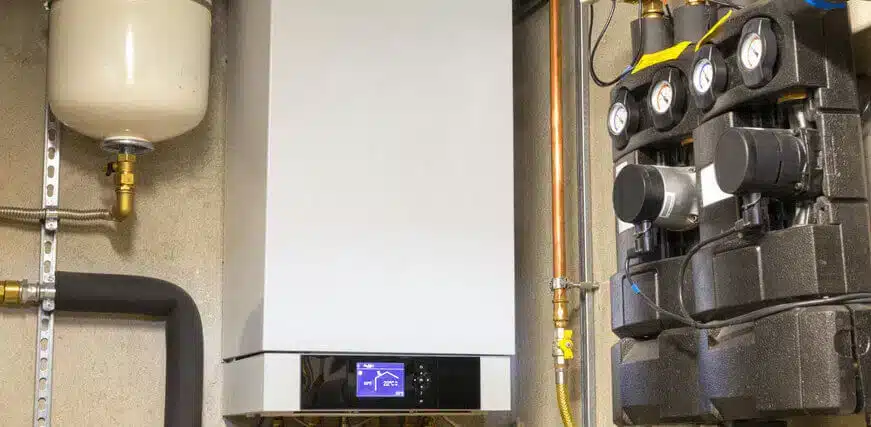
📅 Updated May 8, 2026
Key Takeaways: When to Replace Your Boiler
- Boilers in Colorado Springs typically last 20 to 30 years, but the 15-year mark is when repair vs replace decisions deserve a harder look
- If a repair costs more than 50 percent of the boiler replacement cost on a unit over 15 years old, replacement is almost always the better investment
- Colorado Springs hard water (14 to 17 grains per gallon) accelerates scale buildup and can shorten boiler lifespan compared to soft-water markets
- Carbon monoxide warning signs including a yellow flame, soot, or dark staining around the unit require immediate shutdown and professional inspection
- Boiler replacements scheduled April through August typically cost less than peak-season installations due to lower contractor demand
Your boiler is not going to last forever, and most Colorado Springs homeowners already know that. Knowing when to replace a boiler rather than commit to another repair is one of the most practical decisions you can make for your home and your budget. Getting that decision right matters because a boiler replaced on your schedule costs significantly less than one that fails mid-January and leaves you scrambling for emergency service.
Talmich Plumbing & Heating has handled boiler repair and replacement across Colorado Springs, Monument, Black Forest, and the surrounding area for over 20 years. The eight signs below are what our technicians see repeatedly on service calls when homeowners are facing the boiler repair vs replacement decision. When boiler replacement becomes the smarter answer, it is usually because more than one of these signs is present at the same time.
When boiler replacement is warranted, acting before a complete failure gives you the time to choose the right system, schedule installation at a convenient time, and avoid the premium pricing that comes with emergency replacement calls in the middle of a Colorado winter.
How Long Should a Boiler Last in Colorado Springs?
A well-maintained boiler in Colorado Springs typically lasts 20 to 30 years. That range is wide because lifespan depends heavily on maintenance history, water quality, system load, and the quality of the original installation. A Triangle Tube or Weil-McLain boiler that has been descaled annually and kept in good repair can approach 30 years. A neglected boiler dealing with Colorado’s notoriously hard water may struggle to reach 20.
The 15-year mark is not an automatic replacement trigger, but it is the point where you should start paying close attention. Before 15 years, a repair that costs less than half the replacement cost is almost always worth making. After 15 years, that same calculation deserves a harder look because each repair is one more delay before an inevitable replacement, and efficiency losses are likely already costing you money every month.
Colorado Springs municipal water runs between 14 and 17 grains per gallon of hardness, which is classified as very hard. That mineral load accelerates scale buildup inside the heat exchanger and reduces thermal efficiency over time. A boiler in Colorado Springs faces more accumulated wear from water chemistry alone than a comparable unit in a soft-water market, which is worth factoring into any lifespan estimate.
Sign 1: Your Boiler Is 15 Years Old or More
Age is the single most reliable indicator that a boiler replacement conversation is worth having. After 15 years, boilers begin accumulating the effects of thousands of heat cycles, and the internal components that manage combustion, circulation, and pressure start to operate with less margin for error than they once had.
Beyond mechanical wear, older boilers lack the efficiency and safety features found in modern condensing systems. A boiler installed in 2005 or earlier is likely operating at 75 to 82 percent AFUE at best, and probably lower if it has not been regularly serviced. Current high-efficiency condensing boilers from Navien, Triangle Tube, and Burnham reach 90 to 95 percent AFUE. That efficiency gap translates directly to monthly gas costs, particularly in Colorado Springs where the heating season runs from October through April.
Parts availability is another factor that compounds with age. Boilers older than 15 to 20 years increasingly rely on discontinued or hard-to-source components. When a critical part is no longer manufactured, a repair that would otherwise be straightforward becomes expensive and time-consuming, and sometimes impossible.
Old boiler replacement becomes the right answer not because the unit failed suddenly but because you made a planned, informed decision before a critical failure forced your hand. If your boiler is 15 years old and operating without issues, replacement is not urgent. But any significant repair on a unit that age should prompt a side-by-side comparison of repair cost versus replacement cost before you commit to the work.
Sign 2: Repair Bills Are Approaching the 50 Percent Threshold
The standard guideline for any mechanical system is the 50 percent rule: if the cost of a repair approaches 50 percent of the cost of replacement, replacement is generally the better investment. For a boiler replacement in Colorado Springs typically running between $5,000 and $9,000 depending on system size and efficiency tier, that means any single repair approaching $2,500 to $4,500 on an older unit deserves serious consideration as a replacement trigger.
The boiler repair vs replacement calculation becomes more compelling when you factor in cumulative repair history. A boiler that has required two or three significant repairs in the past three to four years is telling you something. Each repair addresses one symptom while the underlying causes of wear continue progressing. At some point, the next repair is simply funding a system that is heading toward replacement regardless.
Heat exchanger failure is a specific case where the 50 percent rule often points clearly to replacement. A failed heat exchanger on a boiler over 15 years old typically costs more to repair than the value remaining in the system, and it can allow combustion gases to enter the distribution system if left unaddressed. When a technician diagnoses a cracked or failed heat exchanger, replacement is almost always the right answer.
Sign 3: Your Energy Bills Keep Climbing
A boiler that is working harder to produce the same amount of heat will show up in your gas bill before it shows up anywhere else. If your monthly heating costs have been climbing steadily over two or three years without a corresponding increase in usage or a change in gas rates, efficiency loss is the likely explanation.
Efficiency loss in aging boilers comes from several sources. Scale buildup on the heat exchanger surface acts as insulation, forcing the burner to run longer to transfer the same amount of heat to the water. Worn combustion components cause incomplete burning. Expanding and contracting seals develop micro-leaks that reduce system pressure over time. None of these issues are dramatic on their own, but together they can reduce a boiler’s effective efficiency by 10 to 20 percent over its lifespan.
Upgrading from a 78 percent AFUE boiler to a 95 percent AFUE condensing system reduces gas consumption for the same heat output by roughly 18 percent. In Colorado Springs, where a typical home may spend $1,200 to $2,000 annually on space heating, that efficiency improvement returns $200 to $360 per year. Over the 20-to-30-year lifespan of a modern boiler, the energy savings are substantial.
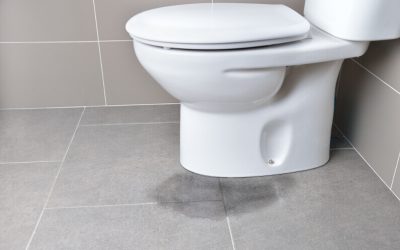
Sign 4: Your Boiler Is Leaking
Any water pooling around the base of your boiler or visible moisture on the unit itself warrants immediate attention. Not every leak is a replacement trigger on its own, but the source and severity of the leak determines whether repair or boiler replacement is the right call.
External leaks from fittings, valves, or circulator pump seals are often repairable at reasonable cost. These components are accessible and replaceable, and on a boiler that is otherwise in good condition and under 15 years old, fixing them makes sense.
Internal leaks are a different matter. A leak originating from the heat exchanger itself indicates structural compromise inside the unit. Heat exchanger leaks can allow water to contaminate the combustion chamber, which is both a performance problem and a safety concern. On an older boiler, a heat exchanger leak is often the point where repair costs exceed the value of the system and boiler replacement becomes the clear answer.
If you are unsure whether a leak is external or internal, do not attempt to diagnose it yourself. Shut the boiler down and call a licensed technician. Continuing to operate a boiler with an undiagnosed internal leak can cause additional damage and creates the conditions for a more serious failure.
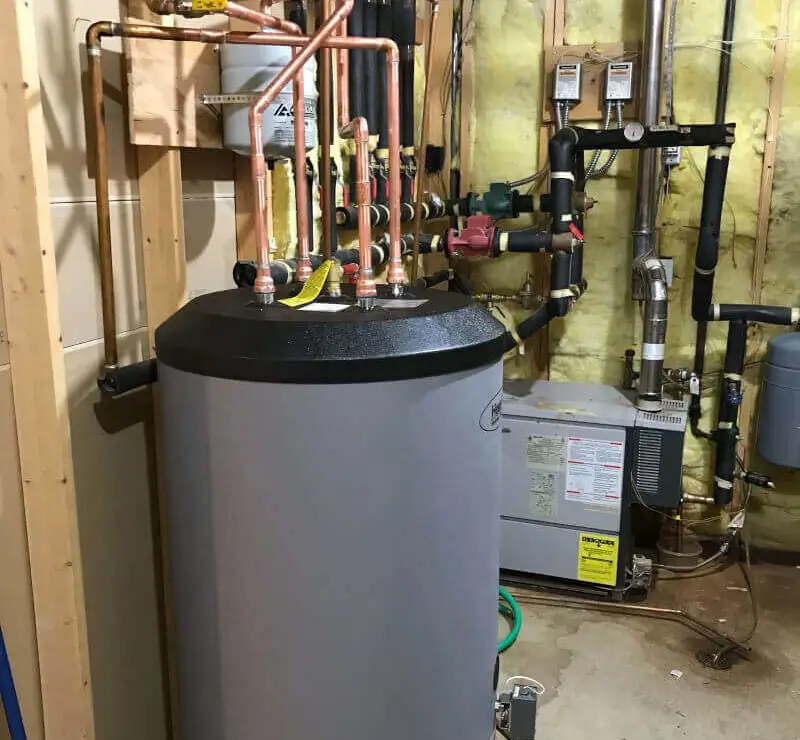
Sign 5: Uneven Heating or Inconsistent Hot Water
A boiler that is working correctly distributes heat evenly throughout the home and provides consistent hot water at a stable temperature. When rooms that used to heat reliably start running cold, or when hot water fluctuates without explanation, the boiler is underperforming relative to the demands being placed on it.
In some cases, inconsistent heating is a circulation problem rather than a boiler problem. A failing circulator pump, an airlock in the system, or an imbalanced distribution loop can all cause uneven heat without the boiler itself being at fault. A technician can determine whether the problem is in the distribution system or in the boiler itself.
When the boiler is confirmed as the source of the problem, the cause is usually a degraded heat exchanger, a failing burner assembly, or a control system that is no longer accurately reading and responding to demand. On a boiler under 12 to 15 years old, these components can often be repaired or replaced cost-effectively. On an older unit, they are signs that the system as a whole is approaching the end of reliable service.
Sign 6: Unusual Noises From the System
A properly functioning boiler operates quietly. Gurgling, banging, whistling, or kettling sounds are all indicators that something inside the system is not working as it should, and each noise pattern points to a different underlying issue.
Kettling, which sounds like a rumbling or bubbling similar to a kettle on the stove, is the most common noise complaint on Colorado Springs boilers and it is directly related to the area’s hard water. Calcium and magnesium deposits build up on the heat exchanger surface over time, causing water to overheat locally and produce steam bubbles that collapse and create the rumbling sound. Annual descaling can prevent kettling, but a heat exchanger with severe accumulated scale may be too far gone for descaling to fully resolve.
Banging or clunking sounds often indicate trapped air in the hydronic system or a circulation pump that is struggling. These are usually repairable. A persistent high-pitched whistle typically points to a pressure issue or a failing valve. Any new or worsening noise on a boiler that is already 15 or more years old should be evaluated promptly, both because the noise indicates a developing problem and because delayed diagnosis on older equipment tends to result in more expensive repairs.
Sign 7: Unusual Odors or Carbon Monoxide Warning Signs
Your boiler should not produce any detectable odor during normal operation. A smell of gas near the boiler is an immediate emergency. If you detect a gas odor, leave the building immediately, do not operate any switches or appliances, and call Colorado Springs Utilities from outside at 719-448-4800.
A metallic or dusty smell when the boiler first starts up after a long idle period is usually normal. Burning dust from the heat exchanger surface is common at the start of heating season and typically clears within an hour or two. A metallic smell that persists throughout operation suggests oxidation or deterioration inside the unit that warrants inspection.
The more serious concern is carbon monoxide. CO is colorless and odorless, which makes it impossible to detect without a functioning carbon monoxide detector. Visual warning signs of a CO problem include a yellow or orange boiler flame rather than the normal steady blue, soot or black staining around the boiler, and dark marks or residue on walls near the flue. If you notice any of these signs, treat it as an emergency. According to the U.S. Environmental Protection Agency, carbon monoxide poisoning is one of the leading causes of accidental poisoning deaths in the United States, and gas appliances in poor repair are a primary source.
Any boiler showing CO warning signs should be taken out of service immediately and inspected by a licensed technician before being restarted. In many cases where CO warning signs are present on an older boiler, replacement is the safest outcome.
Sign 8: Hard Water Scale Has Taken a Toll
This sign is specific to the Colorado Springs area and worth addressing separately because it accelerates the timeline on every other indicator on this list. Colorado Springs water is among the hardest municipal water supplies in the country, running at 14 to 17 grains per gallon of mineral hardness. Every gallon of water that passes through your boiler deposits a small amount of calcium and magnesium on the internal surfaces.
Over 15 to 20 years of operation without consistent descaling maintenance, that accumulation becomes significant. A heat exchanger coated in scale runs hotter than it should, stresses the metal, and transfers heat inefficiently. The result is a boiler that works harder, costs more to operate, and fails earlier than the same unit would in a soft-water market.
If your boiler has never been professionally descaled, or if descaling maintenance has been inconsistent, its effective functional age may be greater than its calendar age. A 15-year-old boiler with no descaling history in Colorado Springs may be in worse mechanical condition than a 20-year-old boiler in a soft-water city that received annual service throughout its life.
When evaluating whether old boiler replacement is the right call, always ask about the system’s maintenance history. A well-documented record of annual service extends the range of justifiable repairs. A boiler with no service history narrows that range considerably.
The Boiler Repair vs Replacement Decision Guide
No single indicator makes the decision for you. Most of the time, the right call depends on how several factors interact. Knowing when to replace a boiler versus when a repair still makes financial sense requires laying those factors side by side. Use the table below as a starting framework before consulting with a technician.
| Boiler Age | Situation | Recommendation |
|---|---|---|
| Under 15 years | Repair cost under 50% of replacement cost | Repair |
| Under 15 years | Repair cost over 50% of replacement cost | Get second opinion before deciding |
| 15 to 20 years | Any repair over $800, second or third significant repair | Seriously evaluate replacement |
| 15 to 20 years | Heat exchanger failure | Replace |
| Over 20 years | Any significant repair | Replace |
| Any age | Carbon monoxide warning signs present | Take out of service immediately, likely replace |
| Any age | Parts no longer manufactured or available | Replace |
One factor that does not appear in this table but matters in Colorado Springs specifically is the off-season pricing opportunity. Old boiler replacement scheduled between April and August typically costs less than peak-season installations because demand on HVAC contractors drops significantly. If your boiler is showing multiple signs from this list but is still functioning, scheduling replacement in the spring or early summer rather than waiting for a winter failure can reduce your total cost meaningfully.
Planning Your Boiler Replacement in Colorado Springs
A boiler replacement in Colorado Springs involves more than choosing a new unit. The altitude at 6,000 feet requires that any new gas boiler be properly adjusted for altitude combustion ratios at installation. A boiler installed without altitude adjustment will run inefficiently and may experience combustion problems that shorten the new unit’s lifespan before it has had a chance to prove itself.
Hard water is also a factor that should be addressed at installation time. If the boiler being replaced failed earlier than expected due to scale accumulation, installing a whole-home water softener or a dedicated in-line scale inhibitor on the new boiler is worth discussing with your technician. Protecting the new system from day one adds years to its useful life.
For homes in Monument and Black Forest, where elevation is higher and winters run colder and longer than Colorado Springs proper, sizing the replacement boiler correctly for the actual heating load is critical. An undersized boiler in a Monument home will struggle to maintain comfortable temperatures during the coldest stretches of the year. Talmich Plumbing & Heating performs load calculations as part of every boiler replacement to ensure the new system is properly matched to the home.
Is It Time to Replace Your Boiler?
If your boiler is showing several of the signs above, the most useful next step is an honest in-home evaluation. Talmich Plumbing & Heating provides free estimates on boiler replacement throughout Colorado Springs and surrounding communities. We will assess your current system, give you a clear picture of its remaining useful life, and recommend the right replacement option if the time has come.
We serve Colorado Springs, Monument, Black Forest, Fountain, Security-Widefield, Cimarron Hills, and surrounding communities.
Schedule a Free Boiler Estimate
Or call us directly: 719-822-0448 | Monday through Friday, 8am to 5pm
Frequently Asked Questions (FAQs)
These are the questions Colorado Springs homeowners most commonly ask when evaluating boiler replacement. If your situation is not covered below, call Talmich Plumbing & Heating at 719-822-0448 and we will walk you through it.
How much does boiler replacement cost in Colorado Springs?
Boiler replacement in Colorado Springs typically runs between $5,000 and $9,000 installed, depending on system size, efficiency tier, and whether the existing distribution system needs modification. High-efficiency condensing boilers from Triangle Tube, Navien, and Weil-McLain sit at the higher end of that range but deliver long-term energy savings that offset the upfront cost. Talmich Plumbing & Heating provides free in-home estimates.
What is the most efficient boiler for a Colorado Springs home?
High-efficiency condensing boilers rated at 90 to 95 percent AFUE are the best choice for Colorado Springs homes. At 6,000 feet elevation, gas appliances must be properly altitude-adjusted at installation to achieve rated efficiency. Navien, Triangle Tube, and Burnham all manufacture condensing boilers well-suited to Colorado’s altitude and climate conditions.
Should I repair or replace a boiler that is 15 years old?
At 15 years, the right answer depends on the repair cost, the overall condition of the system, and the maintenance history. A minor repair on a well-maintained 15-year-old boiler is usually worth making. A major repair approaching 50 percent of replacement cost on a unit with a poor service history is usually the signal to replace. Our boiler repair and replacement page covers this decision in more detail.
How do I know if my boiler has a carbon monoxide problem?
Visual warning signs include a yellow or orange flame rather than a steady blue, soot or black marks around the boiler or flue, and dark staining on nearby walls. CO itself is odorless and colorless, which is why a functioning carbon monoxide detector on every floor is essential. If your detector sounds or you notice visual warning signs, leave the home immediately and call Colorado Springs Utilities at 719-448-4800.
How long does boiler installation take?
A standard boiler replacement in Colorado Springs typically takes one full day for an experienced technician. More complex installations involving changes to the distribution system, flue modification, or additional work like water softener installation may require two days. Talmich Plumbing & Heating coordinates the full installation including altitude adjustment, pressure testing, and system commissioning before leaving the job.




0 Comments