



Key Takeaways: Tankless Water Heater Cost
- Tankless water heater cost in Colorado Springs typically runs $3,000 to $6,000 installed, with the unit itself making up less than half of that total
- The gas line is the single biggest reason two quotes differ, because most homes need a larger line to feed a tankless unit’s high gas demand
- A straightforward same-location swap costs far less than a conversion that needs new gas piping, venting, and electrical work
- Colorado Springs Utilities offers a $300 rebate on qualifying natural gas tankless units, which trims the net cost
- Altitude, cold winter groundwater, and hard water all affect sizing and long-term cost here, so a local quote is more accurate than any national estimate
Tankless water heater cost in Colorado Springs generally runs $3,000 to $6,000 installed, and the unit itself is less than half of that. The rest is installation: the gas line, the venting, the electrical, and the permits. That is why one homeowner pays $3,200 for a simple swap while a neighbor pays $5,800 for a conversion, even with the same unit on the wall.
Most cost guides online give you a national range and stop there, which is useless when you are trying to budget for your actual house. The real answer depends on what your home already has and what it needs added, and the biggest single variable is almost always the gas line.
Talmich Plumbing & Heating installs tankless systems across Colorado Springs, Monument, Black Forest, Fountain, and the surrounding communities, and this guide breaks down exactly what goes into the price, what drives it up or down, and how to read a quote so you are not surprised later. If you are weighing a tankless water heater for your home, this is the honest cost picture.
Tankless Water Heater Cost at a Glance
Here is the realistic installed range for the Colorado Springs area in 2026, broken into the scenarios that actually determine what you pay.
Those ranges reflect natural gas whole-home units, which is what most Colorado Springs homes install. The takeaway is simple: the tankless water heater cost you should plan for is the installed total, not the box price, and where you land in the range depends almost entirely on your gas line and venting.
What Actually Goes Into the Price
A tankless quote is really five separate costs bundled together. Understanding each one is how you tell a fair quote from an inflated one, and how you understand why yours differs from your neighbor’s.
The unit itself runs $1,000 to $2,500 depending on capacity, brand, and efficiency. Condensing models from Navien, Rinnai, and Noritz cost more up front but run more efficiently, which matters over a 20 year lifespan.
Labor runs $500 to $1,500 for the installation itself, separate from any infrastructure work. A tankless install is more involved than swapping a tank, and the labor reflects the added complexity.
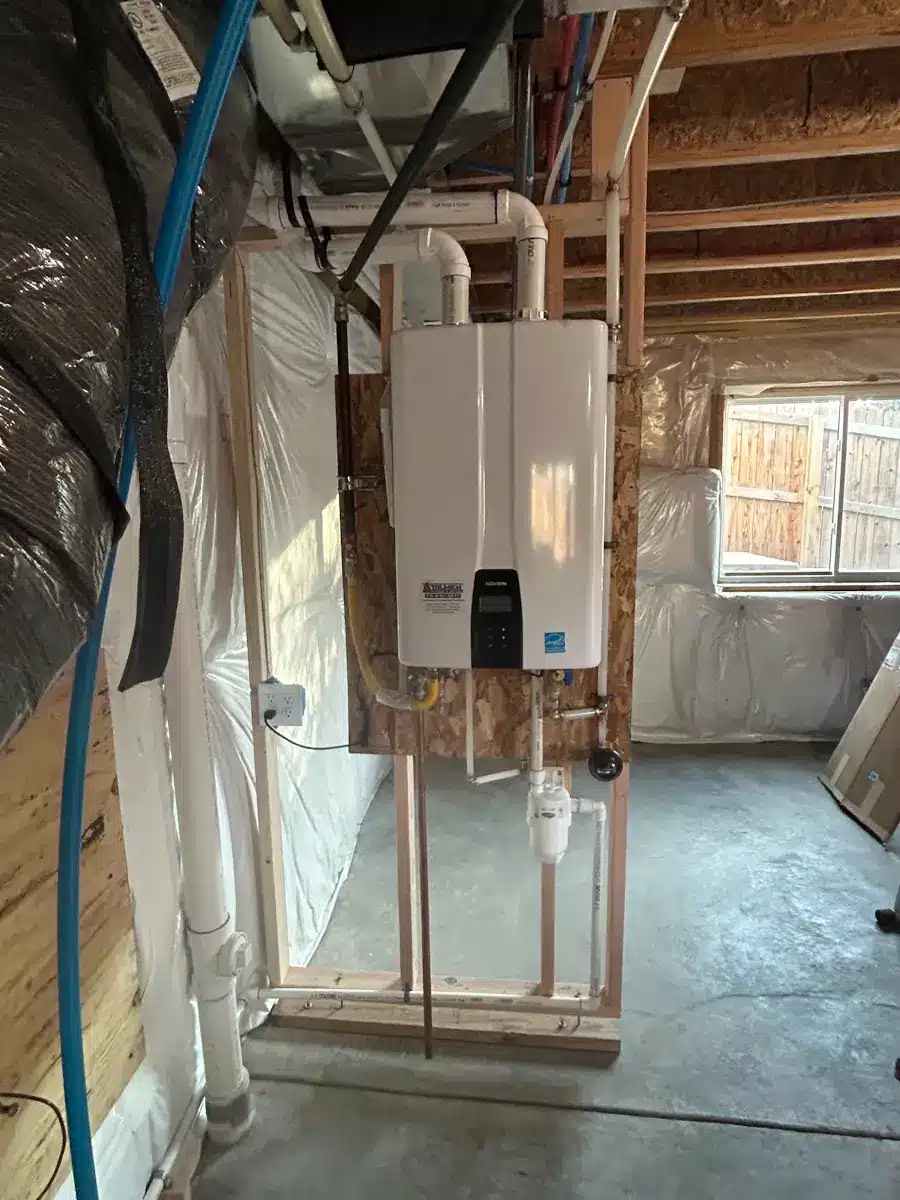
The gas line is the wild card, and it is covered in depth below because it is the factor that most often decides your final number. Venting is the fourth cost, since the old tank flue cannot be reused and a tankless unit needs its own properly sized venting, which adds a few hundred dollars in most cases. Finally, permits and electrical round out the job.
The Gas Line Is Why Quotes Differ So Much
If two tankless quotes come back hundreds or thousands of dollars apart, the gas line is almost always the reason. This is the part national cost guides gloss over, and it is the part that decides your real tankless water heater cost.
A storage tank sips gas at roughly 40,000 BTU per hour. A whole-home tankless unit demands 150,000 to 199,000 BTU per hour, four to five times as much, because it heats water instantly instead of slowly filling a tank. All of that gas has to travel through your gas line, and the half inch pipe that fed your old tank usually cannot carry it.
When the existing line is too small, the installer has to run a larger one, typically three quarter inch or bigger, from the meter to the unit. That is real labor and material, and it scales with distance. A unit ten feet from the meter is cheap to feed. A unit sixty feet away through finished walls is not.
Here is a real Colorado Springs example that shows the effect. On one conversion the tankless unit cost $1,800, but the job needed roughly sixty feet of new three quarter inch gas line plus venting and electrical work. The finished total came to about $4,200. The unit was less than half the bill, and the gas line was the difference.
This is also why you should be skeptical of any quote that promises to reuse your existing line without measuring. Sometimes the old line genuinely works and you save that money. Often it does not, and a quote that assumes it will is a quote that grows after the work starts.
Want a real number for your home? Talmich Plumbing & Heating measures your gas line, total load, and venting up front, so the tankless quote you get is the price you pay. Call 719-822-0448 or schedule online.
Simple Swap vs Full Conversion
The largest single factor in your tankless water heater cost is whether your home is set up for an easy swap or needs a full conversion. These are two very different jobs at two very different prices.
A simple swap happens when you are replacing an existing tankless unit, or when your home already has an adequate gas line and venting close to the install location. Here the work is mostly removing the old unit, mounting the new one, and connecting existing infrastructure. This is the low end of the range, often $3,000 to $3,800 installed.
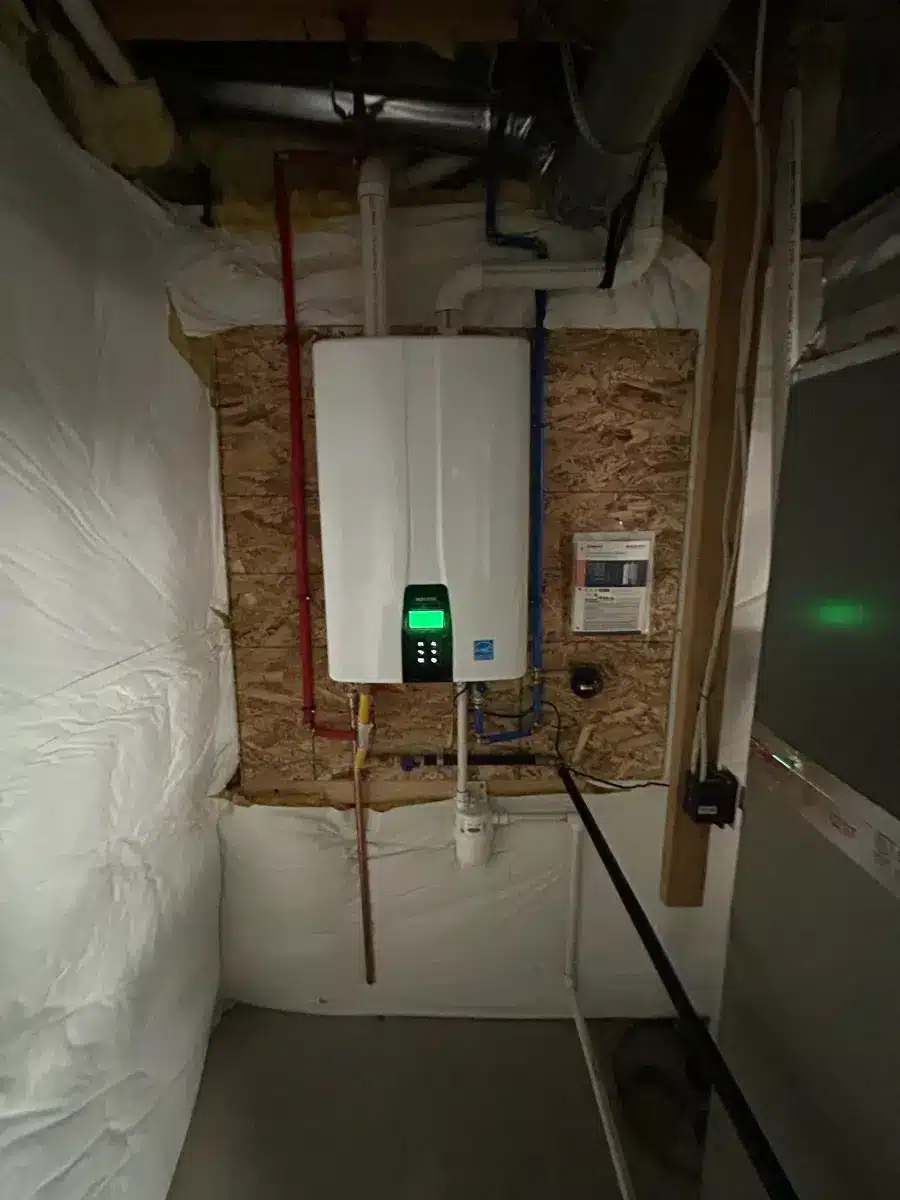
A full conversion is going from a traditional tank to tankless for the first time. This is where the gas line upgrade, new venting, and often added electrical come in, because a tank install was never built to feed a tankless unit. Conversions land in the $4,200 to $6,500 range depending on how far the gas line has to run and how difficult the routing is.
Neither is inherently better value. A conversion costs more because it genuinely involves more work, and that work is what makes the unit perform correctly for the next two decades. The mistake is budgeting for a swap when your home actually needs a conversion, which is exactly what happens when a quote hides the gas line.
What Drives Your Quote Up or Down
Two homes on the same street can get tankless water heater cost quotes a couple thousand dollars apart, and it is never random. A handful of specific conditions move your number, and knowing them helps you understand your own quote and plan for it.
Distance from the gas meter is the biggest one. The farther the unit sits from your meter, the more pipe has to be run to feed it at full BTU, and the more labor to route that pipe through the structure. A basement unit near the meter is cheap to feed. A unit on the far side of the house or up a floor is not.
Routing difficulty compounds distance. Running new gas line through an open, unfinished basement is quick. Running it through finished walls, around obstacles, or across a crawl space takes far longer and costs more. The same sixty feet of pipe can be a modest charge or a major one depending on what the installer has to open up to reach the unit.
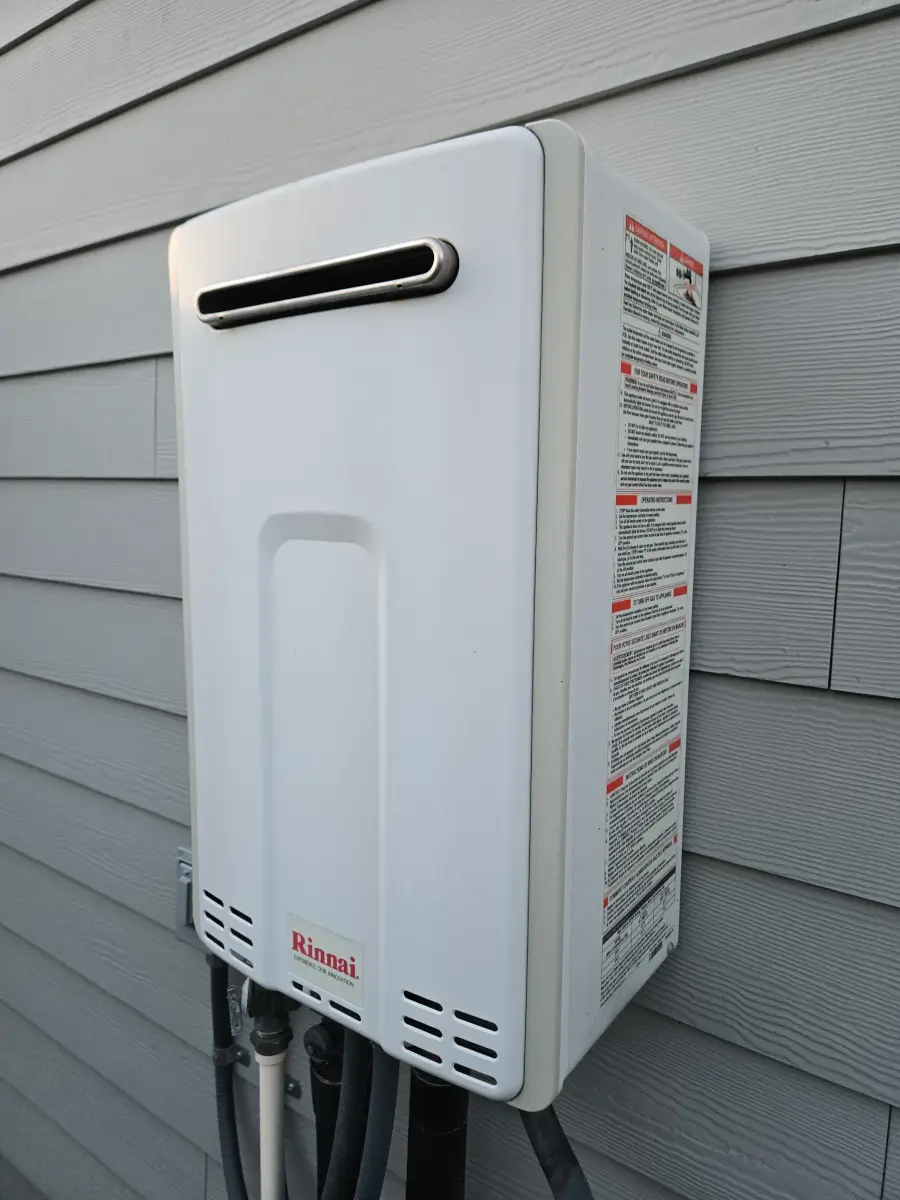
Indoor versus outdoor placement matters too. Colorado Springs installs go both ways. An outdoor unit avoids some interior venting work but needs freeze protection for our winters, while an indoor unit needs proper venting to the exterior. Each path has its own cost profile, and the right one depends on your home rather than a one-size default.
Finally, whether you are upgrading capacity affects price. A household adding bathrooms or planning for higher simultaneous demand needs a larger unit, and a larger unit needs more gas, which can push the line size up. Sizing for today versus sizing for the home’s future is a conversation worth having before the quote is finalized.
How Tankless Compares to a Tank on Total Cost
The up-front tankless water heater cost is only half the comparison. To decide honestly, you have to look at what each system costs to own over its full life, because that is where tankless closes much of the gap.
A tank water heater costs roughly $1,500 to $3,000 installed and lasts 10 to 12 years. A tankless system costs more up front but lasts 20 years or more, which means over a 20 year window you buy and install one tankless unit versus roughly two tanks. That avoided second replacement offsets a real portion of the higher initial price.
On the monthly side, tankless efficiency of 24 to 34 percent over a tank shows up as a lower gas bill for the life of the unit. It is not a dramatic number in any single month, but across 20 years it adds up alongside the avoided replacement. Add the endless hot water and recovered floor space, and the total-cost picture is much closer than the sticker prices suggest.
The verdict still depends on your timeline. Stay in the home for years and tankless earns its higher cost back through longevity and efficiency. Sell soon and the tank’s lower up-front cost may win. The point is to compare total cost of ownership, not just the installed quote, because that is where the honest answer lives.
Rebates That Lower Your Net Cost
The sticker price is not always the final price, because local incentives can bring down what you actually pay for a qualifying tankless system.
Colorado Springs Utilities offers a $300 rebate on qualifying high-efficiency natural gas tankless units. Separately, some natural gas suppliers in the region offer their own rebate of a similar amount for units meeting a high Uniform Energy Factor threshold. These do not transform the total, but a few hundred dollars off a qualifying unit is real money and worth confirming before you buy.
Rebate programs change, and eligibility depends on the specific model’s efficiency rating, so the current terms should be verified with the utility at the time of installation. A good installer will know which units qualify and will help you capture the rebate rather than leaving it on the table. When comparing quotes, ask whether the unit being proposed qualifies for the CSU rebate, because a slightly more efficient unit that earns the rebate can cost less on net than a cheaper one that does not.
Local Factors That Change Your Cost Here
National cost estimates assume an average home in an average climate, and Colorado Springs is neither. Three local realities affect both your up-front tankless water heater cost and what you spend over the life of the unit.
Altitude comes first. At roughly 6,000 feet, gas appliances must be de-rated and adjusted for elevation, which is a step a competent local installer builds into the job. An installer who sets a unit to sea level defaults leaves performance and efficiency on the table, which quietly costs you every month.
Cold groundwater is the second. Tankless capacity is measured by how much it raises incoming water temperature at a given flow. Colorado winters deliver genuinely cold incoming water, which means a unit has to work harder and its usable flow rate drops. Homes here often need a higher-capacity unit than the same-size home in a warm climate, which nudges the unit cost up but prevents lukewarm showers on January mornings.
Hard water is the third, and it is a long-term cost rather than an install cost. Colorado Springs water runs 14 to 17 grains per gallon, which is very hard, and that mineral load builds scale inside the tankless heat exchanger. Annual descaling, roughly $100 to $200, protects the most expensive component in the unit and keeps it running at full capacity. Budgeting for it from the start is part of an honest cost picture.
Permits and Why They Matter to the Price
A tank to tankless conversion is permitted work in the Colorado Springs area, and that is a feature rather than a nuisance. The Pikes Peak Regional Building Department, which serves Colorado Springs, Fountain, and El Paso County, requires both a plumbing permit and a gas permit for a conversion.
Permit fees are modest, generally in the range of tens to a few hundred dollars depending on scope, and they are usually folded into the installer’s quote. What they buy you is inspection of the gas connections and venting on a high-BTU appliance, which is a genuine safety matter.
Here is where it touches cost in a way people miss. A quote that skips permits may look cheaper, but unpermitted work can surface at resale, fail inspection, and cost more to correct than doing it right the first time. When you compare quotes, confirm permits are included. A quote without them is not actually cheaper, it just defers the cost to a worse moment.
Is a Tankless Water Heater Worth the Cost?
Given that a tankless conversion can cost nearly double a tank replacement, the fair question is whether it pays off. The honest answer is that it depends on how long you will own the home and how you value the benefits.
On lifespan, a tankless unit lasts 20 years or more with maintenance, roughly double a tank’s 10 to 12 years. Over that horizon you avoid one full replacement cycle, which offsets part of the higher up-front cost. On energy, tankless units are 24 to 34 percent more efficient for homes with typical hot water use, which shows up as a lower gas bill every month.
Then there are the benefits that do not show up on a spreadsheet: endless hot water, the recovered floor space where the tank used to sit, and the reduced risk of a tank rupture flooding your home. For a homeowner staying put for years, those add up. For someone selling within a year or two, a tank replacement may simply make more financial sense, and an honest installer will tell you so.
The worst outcome is buying tankless for the wrong reasons or from a quote that hid half the cost. When the price is transparent and the unit is sized and installed correctly for this climate, a tankless system is a genuinely strong long-term investment. That is the standard every quote should be held to.
How to Read a Tankless Quote
The difference between a fair quote and a painful surprise usually comes down to a few questions asked before you sign. A contractor who answers these cleanly is one whose number will hold.
✓ Is the gas line upgrade included, or a separate charge if my line is too small?
✓ Did you calculate the gas line for my full run and total appliance load?
✓ Are the plumbing and gas permits included in this price?
✓ Does the proposed unit qualify for the CSU rebate?
✓ Is the unit sized and de-rated for our altitude and winter groundwater?
A quote that reuses your gas line without measuring, leaves out permits, or ignores altitude looks cheaper today and costs more later. The honest tankless water heater cost includes all of it up front, and a real local installer will show you the whole number rather than the attractive half of it.
Talmich Plumbing & Heating sizes every tankless install to the actual home, pulls the correct permits, helps you capture available rebates, and adjusts each unit for our elevation. We install across Colorado Springs, Monument, Black Forest, Fountain, Security-Widefield, and Cimarron Hills, and when we quote a tankless conversion the gas line is in the number, because that is the only honest way to price the job.
Get a Real Tankless Quote, Not a Guess
Talmich Plumbing & Heating provides free in-home tankless evaluations across the Colorado Springs area. We measure your gas line, total load, venting, and meter capacity, size the unit for our altitude and climate, help you claim any rebate you qualify for, and give you one honest installed number with no surprises after the fact.
Serving Colorado Springs, Monument, Black Forest, Fountain, Security-Widefield, Cimarron Hills, and surrounding communities.
Schedule a Free Tankless Evaluation
Or call us directly: 719-822-0448 | Monday through Friday, 8am to 5pm
Frequently Asked Questions
These are the questions Colorado Springs homeowners most commonly ask about tankless water heater cost and installation. If your situation is not covered below, call Talmich Plumbing & Heating at 719-822-0448 and we will walk you through it.
How much does a tankless water heater cost in Colorado Springs?
Installed tankless water heater cost in Colorado Springs generally runs $3,000 to $6,000, with the unit itself accounting for $1,000 to $2,500 of that. A simple swap where the existing gas line and venting work out lands at the low end, while a full tank-to-tankless conversion that needs a new gas line, venting, and electrical reaches the higher end. The gas line is usually the single largest reason two quotes differ.
Why is tankless installation so much more expensive than a tank?
Because a tankless unit demands four to five times the gas of a tank, so most conversions require a larger gas line, new venting, and sometimes added electrical. A tank simply drops into existing connections, while a tankless conversion often rebuilds the gas and venting infrastructure to feed a 150,000 to 199,000 BTU appliance. That added work, not the unit price, is what raises the total.
Does a tankless water heater qualify for any rebates in Colorado Springs?
Yes. Colorado Springs Utilities offers a $300 rebate on qualifying high-efficiency natural gas tankless units, and some regional gas suppliers offer a similar rebate for high-efficiency models. Eligibility depends on the unit’s efficiency rating, and programs change, so confirm current terms with the utility before purchase. A slightly more efficient unit that earns the rebate can cost less on net than a cheaper one that does not.
Can I save money by reusing my existing gas line?
Sometimes, but not as often as budget quotes suggest. If your existing line is short, already three quarter inch or larger, and not heavily loaded by other appliances, it may feed a tankless unit and save you that cost. In many Colorado Springs homes the old half inch line cannot deliver enough gas, and reusing it starves the unit. The only way to know is a proper sizing calculation, not an assumption, which is why a real quote requires an in-home look.
Is a tankless water heater worth the higher cost?
For homeowners staying in their home for years, usually yes. A tankless unit lasts about 20 years versus 10 to 12 for a tank, runs 24 to 34 percent more efficiently, frees up floor space, and removes the risk of a tank rupture. For someone selling within a year or two, a standard tank replacement may make more financial sense. An honest installer will tell you which fits your situation rather than pushing the more expensive option.






0 Comments