



Key Takeaways: Heat Pump Rebates in Colorado Springs
- Heat pump rebates in Colorado Springs come from two active sources in 2026: Colorado Springs Utilities programs, including a new $1,500 electric bill credit for approved heat pumps under three tons, and Colorado state incentives
- The federal 25C heat pump tax credit expired December 31, 2025 and does not apply to 2026 installations, despite many websites still advertising it
- Xcel Energy rebates advertised across Colorado do not apply in Colorado Springs because CSU is an independent municipal utility with its own programs
- Colorado’s state heat pump tax credit is claimed by your installing contractor and passed through as a direct price reduction, so it only benefits you if your contractor is registered for it
- Rebate eligibility depends on installing cold climate rated equipment that is properly sized for Colorado Springs altitude, which makes contractor selection as important as the incentives themselves
Heat pump rebates in Colorado Springs currently come from four active sources: Colorado Springs Utilities equipment rebates, a new $1,500 CSU electric bill credit for approved units under three tons, the contractor claimed state tax credit, and the state Heat Pump Incentive worth up to $1,500 for market rate households. Stacked together they routinely remove thousands of dollars from a cold climate installation. The federal 25C credit expired at the end of 2025, and the rebates advertised most heavily across Colorado do not apply inside city limits at all.
Talmich Plumbing & Heating installs heat pump systems throughout the region as part of our air conditioning services, and a large part of our job is helping homeowners understand which heat pump rebates they actually qualify for before committing to a system. Getting that answer wrong costs real money, and getting it right routinely saves thousands.
This guide covers the heat pump rebates Colorado Springs homeowners can claim right now, what expired, what your installation needs to include to qualify, and what the combined incentives are realistically worth on an actual project.
The 2026 Heat Pump Rebates Landscape at a Glance
Here is the honest summary of where each major program stands as of mid 2026. The rest of this guide walks through each row in detail.
Two rows cause most of the confusion we hear from homeowners comparing quotes. The federal 25C credit that covered up to $2,000 of an installation ended December 31, 2025, yet plenty of national websites and even some contractor pages still advertise it. Any 2026 quote leaning on it should be treated as out of date.
The second point of confusion is Xcel. The Xcel Energy incentives that dominate statewide search results apply only in Xcel territory, and this region is served by its own municipal utility instead. That is genuinely good news, because the local programs were designed for this community and its climate rather than for the state as a whole.
Colorado Springs Utilities Rebates for Heat Pumps
The Colorado Springs Utilities rebates are the foundation of the local incentive stack, and the 2026 program year brought the most significant expansion yet. Starting January 1, 2026, CSU provides a $1,500 electric bill credit to customers approved for heat pump rebates on units under three tons. That credit stacks on top of the underlying equipment rebate.
The under three ton range covers the majority of homes in the area, which means most local installations can now capture both layers. For many projects, the bill credit alone covers a meaningful share of the price difference between standard and cold climate equipment.
Beyond the bill credit, CSU maintains equipment rebates on qualifying high efficiency heat pumps, heat pump water heaters, and weatherization improvements. Enhanced amounts are available for income qualified customers. Exact values depend on equipment tier, system size, and the efficiency rating of the specific unit installed.
Current amounts and application requirements are published on the CSU residential HVAC rebates page, and we recommend confirming figures there before committing to equipment. One requirement that regularly catches homeowners off guard: eligibility is tied to the specific model installed and how the installation is performed. A unit that misses an efficiency threshold by a small margin can turn expected heat pump rebates into a denied application.
Colorado State Incentives That Stack on Top
Beyond the utility programs, the state of Colorado runs two incentives that stack with them, and both remain active in 2026.
The state heat pump tax credit applies to air source installations and works differently than a typical credit. It is claimed by the installing contractor, who is required to pass the value through to you as a discount on the installed price. The credit shows up as a lower quote rather than a refund months later.
That structure has a catch: the credit only exists for you if your contractor is registered to claim it. This makes it a direct question to ask of anyone quoting your project. Is the state heat pump credit reflected in this number, and are you registered for it?
The Colorado Heat Pump Incentive, administered through the Colorado Energy Office, adds up to $1,500 for market rate households and larger amounts for income qualifying households on eligible installations. It was designed to stack with the federal rebates, and even with the federal side now largely unavailable locally, the state portion remains claimable. Homeowners who want to verify program status at the source can do so through the Colorado Energy Office.
What Changed at the Federal Level
The federal picture changed substantially between 2025 and 2026, and outdated federal promises are the most common piece of misinformation in heat pump marketing right now.
The 25C Energy Efficient Home Improvement credit, worth up to $2,000 on qualifying installations, expired on December 31, 2025. Systems installed in 2026 do not qualify no matter when they were quoted or purchased.
The HEAR program, the income qualified electrification rebate offering up to $8,000 toward cold climate equipment for lower income households, technically remains active in Colorado. However, the funding allocated to Front Range single family homes was fully reserved as of April 2026, and this area sits inside that region. If your household would have qualified on income, the practical path in 2026 runs through the CSU income qualified programs and the state incentive instead.
Why Cold Climate Equipment and Altitude Sizing Decide Everything
Qualifying for heat pump rebates is only half the equation. The other half is making sure the system performs in local conditions, because a unit that struggles here will cost more in operation than any incentive saved up front.
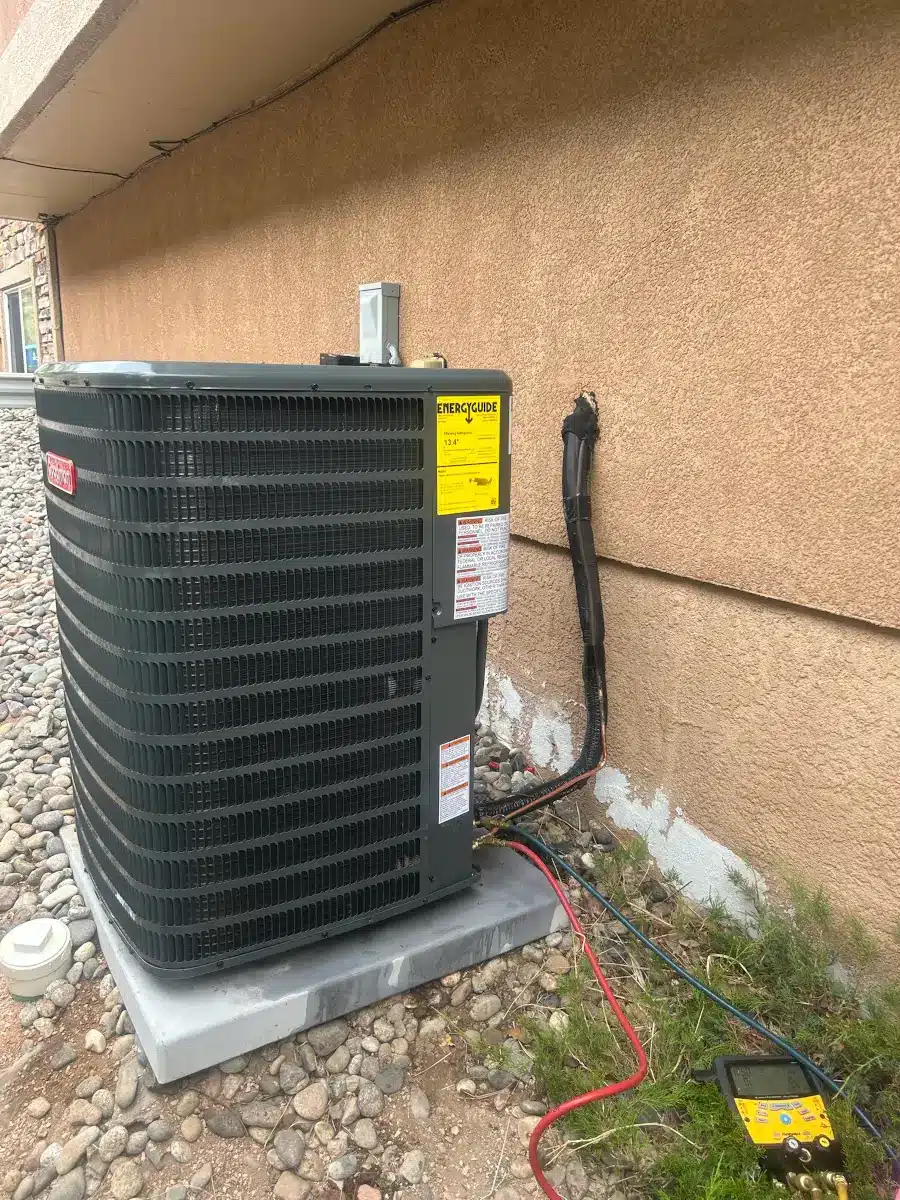
This region sits at roughly 6,000 feet with winter overnight lows that regularly fall below zero. Standard heat pumps lose heating capacity quickly as outdoor temperatures drop. Cold climate rated units are engineered to deliver usable heat at minus 13 degrees and below, which is the specification that matters for dependable winter performance here.
Cold climate certification is also the tier the strongest heat pump rebates are built around. The nonprofit Northeast Energy Efficiency Partnerships maintains the independent cold climate air source heat pump product list that many rebate programs reference. Checking whether a quoted model appears on it is one of the fastest ways to verify you are being offered genuine cold climate equipment rather than a standard unit with optimistic marketing.
Altitude adds a second layer that national guidance ignores entirely. Air at 6,000 feet is thinner than at sea level, which affects airflow, refrigerant behavior, and delivered capacity. A system sized correctly for an identical home in Kansas City can come up short at elevation here.
This matters for the money too. Several programs require equipment matched to a documented load calculation as a condition of payment. An oversized or undersized system can cost you performance and incentive dollars at the same time.
Not sure what your home qualifies for? Talmich Plumbing & Heating provides free in-home evaluations that cover sizing, equipment options, and exactly which heat pump rebates your installation can claim. Call 719-822-0448 or schedule online.
Does Your Address Change What You Qualify For?
Utility territory matters more than most homeowners realize, because utility rebates follow the utility that bills you rather than your mailing address. Inside city limits, CSU programs apply.
North of the city the picture shifts. Parts of Monument and Black Forest are served by Mountain View Electric Association rather than the municipal utility, and MVEA runs its own separate rebate programs for electric heating equipment. A Monument homeowner on MVEA service should compare that co-op’s current offerings rather than assuming the CSU numbers apply.
The state incentives work everywhere. The contractor claimed tax credit and the Colorado Heat Pump Incentive follow the installation, not the utility, so homeowners in Monument, Black Forest, Fountain, and every surrounding community can claim them regardless of who sends the electric bill. When we quote projects outside CSU territory, we build the incentive stack around the programs that actually apply to that address.
How a Heat Pump Fits With Your Existing Furnace
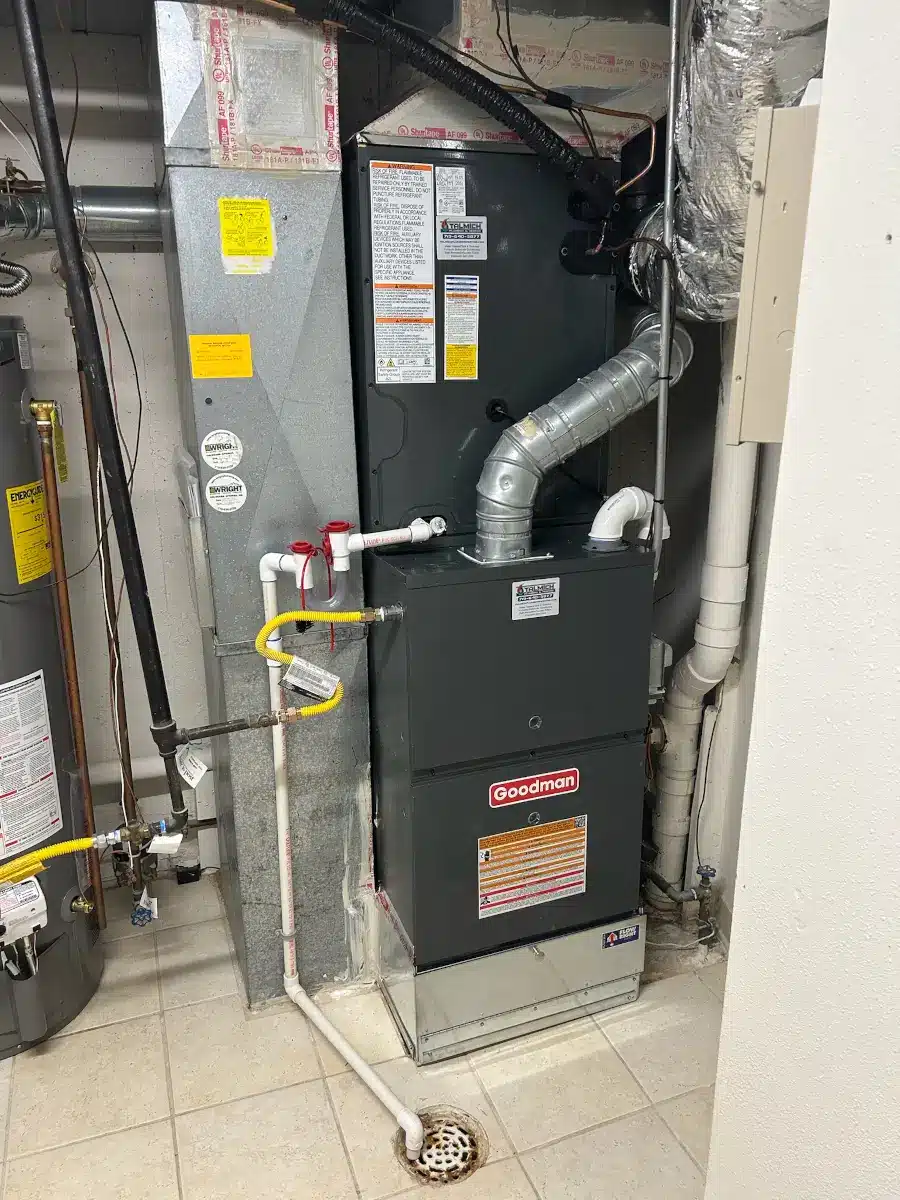
The question we hear most often: does installing a heat pump mean giving up the gas furnace? For most homes in this climate, no. The most practical configuration is a dual fuel system, where a cold climate unit carries the majority of the heating season at high efficiency and the existing gas furnace takes over automatically during the deepest cold snaps.
Dual fuel keeps the reliability of the furnace you already trust while capturing heat pump efficiency for the hundreds of hours each winter when temperatures sit in the 20s and 30s, which is where local winters spend most of their time. The heat pump also replaces your air conditioner outright, since every heat pump cools in summer exactly like a central AC.
For a home with an aging AC condenser and a furnace with life left in it, a dual fuel conversion at rebate supported pricing is frequently the smartest total investment available. It is also the configuration where heat pump rebates change the math most dramatically, because the incentives offset the cost step up from a plain AC replacement.
What Heat Pump Rebates Are Worth on a Real Installation
Incentive programs are abstract until they land on an actual quote, so here is how the active stack applies to a typical local installation in 2026. Exact values depend on equipment selection, household income, and current program terms.
Stacked together, these layers routinely take thousands of dollars off a cold climate installation. The homeowners who capture the full value share one habit: they confirm every layer before signing, not after installation.
How to Actually Collect Your Heat Pump Rebates
The application side is where good projects leak money. This is the sequence that works, in order.
- Confirm which utility bills your home, then review current program terms on that utility’s rebate page, since amounts and requirements are updated periodically
- Get quotes only from contractors registered for the state tax credit and experienced with utility rebate paperwork, and ask each which incentives are reflected in their number
- Insist on a documented load calculation before any equipment is selected, both for performance and for program compliance
- Verify the exact model quoted meets the cold climate and efficiency thresholds of every program you plan to claim before installation is scheduled
- Keep the invoice, the AHRI certificate, and the load calculation together, because rebate applications commonly request all three
None of these steps is difficult. Skipping any one of them is how homeowners end up reading denial letters for heat pump rebates they legitimately should have received.
Questions to Ask Before You Sign Anything
A ten minute conversation separates contractors who know this incentive landscape from contractors who are guessing. Four questions do most of the work.
✓ Is the state heat pump tax credit included in this quote, and are you registered to claim it?
✓ Which utility rebate tier does this equipment qualify for, and does the under three ton bill credit apply to my system size?
✓ Can I see the load calculation, and was it run for my home at this elevation?
✓ Does the quoted model appear on the cold climate product list the rebate programs reference?
A contractor who answers all four without hesitation is a contractor whose paperwork will hold up when the rebate application is reviewed. A contractor who stumbles on any of them is asking you to gamble thousands of dollars on their learning curve.
Talmich Plumbing & Heating installs heat pump systems across the region with every unit sized for actual local conditions and altitude, and we walk through the full incentive picture honestly before you spend anything. Heat pump rebates are strong right now for homeowners who install the right equipment the right way, and that combination is exactly the standard we hold every installation to.
Ready to See What Your Home Qualifies For?
The current heat pump rebates make 2026 a genuinely favorable year to convert, but only for systems that are correctly specified, correctly sized, and installed by a contractor who knows the programs. Talmich Plumbing & Heating provides free in-home evaluations covering system sizing, dual fuel options with your existing furnace, and an honest rundown of every incentive your installation qualifies for.
We serve Colorado Springs, Monument, Black Forest, Fountain, Security-Widefield, Cimarron Hills, and surrounding communities.
Schedule a Free Heat Pump Evaluation
Or call us directly: 719-822-0448 | Monday through Friday, 8am to 5pm
Frequently Asked Questions
These are the questions Colorado Springs homeowners most commonly ask about heat pump rebates and installation. If your situation is not covered below, call Talmich Plumbing & Heating at 719-822-0448 and we will walk you through it.
What heat pump rebates are available in Colorado Springs right now?
Colorado Springs homeowners can currently claim four active heat pump rebates: CSU equipment rebates, the new $1,500 CSU electric bill credit for approved units under three tons, the contractor claimed Colorado state heat pump tax credit, and the state Heat Pump Incentive of up to $1,500 for market rate households. Income qualified households may be eligible for enhanced CSU amounts. Confirm current figures at csu.org before committing, since program terms are updated periodically.
Is the federal heat pump tax credit still available in 2026?
No. The federal 25C tax credit that covered up to $2,000 of a heat pump installation expired on December 31, 2025 and does not apply to systems installed in 2026. Websites still advertising it are out of date. The active incentives for Colorado Springs installations in 2026 are the CSU utility programs and the Colorado state incentives.
Do Xcel Energy heat pump rebates apply in Colorado Springs?
No. Colorado Springs is served by Colorado Springs Utilities, an independent municipal utility, not Xcel Energy. The Xcel rebates that appear throughout Colorado heat pump marketing apply only in Xcel territory. The heat pump rebates that matter for Colorado Springs homeowners are the CSU programs combined with the state incentives, which is what every local quote should be built around.
Do heat pumps actually work in Colorado Springs winters?
Yes, with the right equipment. Cold climate rated heat pumps produce usable heat at minus 13 degrees and below, which covers the overwhelming majority of Colorado Springs winter conditions. Most local installations pair the heat pump with the existing gas furnace in a dual fuel configuration, so the furnace automatically covers the deepest cold snaps while the heat pump carries the rest of the season at higher efficiency and lower cost.
How much can heat pump rebates save on a Colorado Springs installation?
Stacked heat pump rebates routinely remove thousands of dollars from a cold climate installation in Colorado Springs. The layers include the CSU equipment rebate, the $1,500 bill credit on qualifying units under three tons, the state tax credit passed through by a registered contractor, and the state Heat Pump Incentive. The exact total depends on system size, equipment tier, and household income. Talmich Plumbing & Heating itemizes every incentive on the quote so you can see exactly what your installation qualifies for before you decide.
Does my electrical panel need to be upgraded for a heat pump?
Not always, and many homes need no electrical work at all. Homes with 200-amp service typically have ample capacity, while some older homes with 100-amp panels may need an evaluation to confirm the system can be supported. This is checked during the in-home evaluation before anything is quoted, so panel capacity is never a surprise cost after the fact.
Will a heat pump raise my monthly utility bill?
For most homes the total energy spend goes down, because a cold climate unit delivers two to three times more heat per dollar than electric resistance heat and displaces gas usage during the mild majority of the heating season. Your electric bill rises while your gas bill falls, and in a dual fuel setup the system automatically uses whichever fuel is most economical for the conditions. The new $1,500 bill credit also directly offsets electric costs in the first years of ownership.



0 Comments