



Key Takeaways: Swamp Cooler vs Central AC
- A swamp cooler works by evaporating water into dry air, which means its cooling power drops sharply as outdoor humidity rises
- Monsoon moisture arrives across the Front Range in mid July and runs through August, which is exactly when evaporative cooling performs worst and homeowners need cooling most
- A swamp cooler costs far less to run than central air conditioning, roughly a quarter of the electricity, but it uses water and requires seasonal maintenance every year
- Local water hardness of 14 to 17 grains per gallon destroys swamp cooler pads faster here than in soft water markets, driving up upkeep and shortening equipment life
- Converting to central air usually means adding a condenser, an evaporator coil, and a properly sealed roof penetration, and it pairs well with an existing forced air furnace
A swamp cooler cools better than central air conditioning during roughly ten months of the year in this climate, and noticeably worse during the two months you care about most. That is the honest answer to the swamp cooler vs air conditioner question here, and it is why this decision splits Front Range homeowners more than almost any other comfort choice. Evaporative cooling thrives on dry air, and monsoon season takes the dry air away right as July turns brutal.
Talmich Plumbing & Heating has installed, serviced, and replaced both types of systems across this region for over 20 years as part of our air conditioning services. We are not here to talk anyone out of a system that works for them.
What follows is a straight comparison: how each one actually cools, where a swamp cooler genuinely beats refrigerated air, where it falls down, what each costs to own, and what converting involves if you decide to make the switch.
How Each System Actually Cools Your Home
The two systems do not just differ in cost or size. They cool using completely different physics, and that difference explains every strength and weakness that follows.
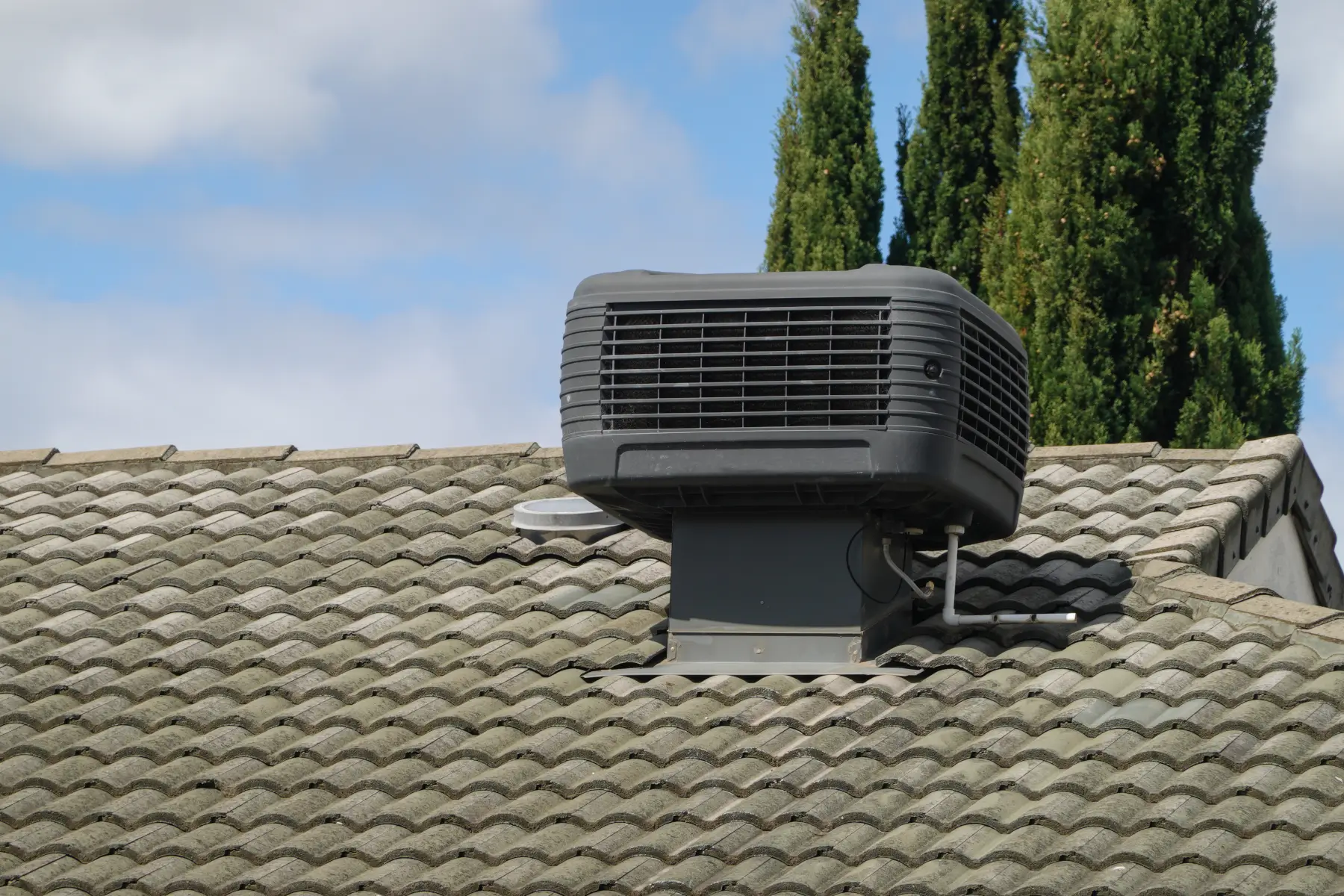
A swamp cooler pulls hot outside air through wet pads. As water evaporates off those pads it absorbs heat, and the air coming out the other side is cooler and more humid. A blower pushes that air into your home, and because it constantly introduces outside air, you have to leave a window or vent cracked so air has an exit.
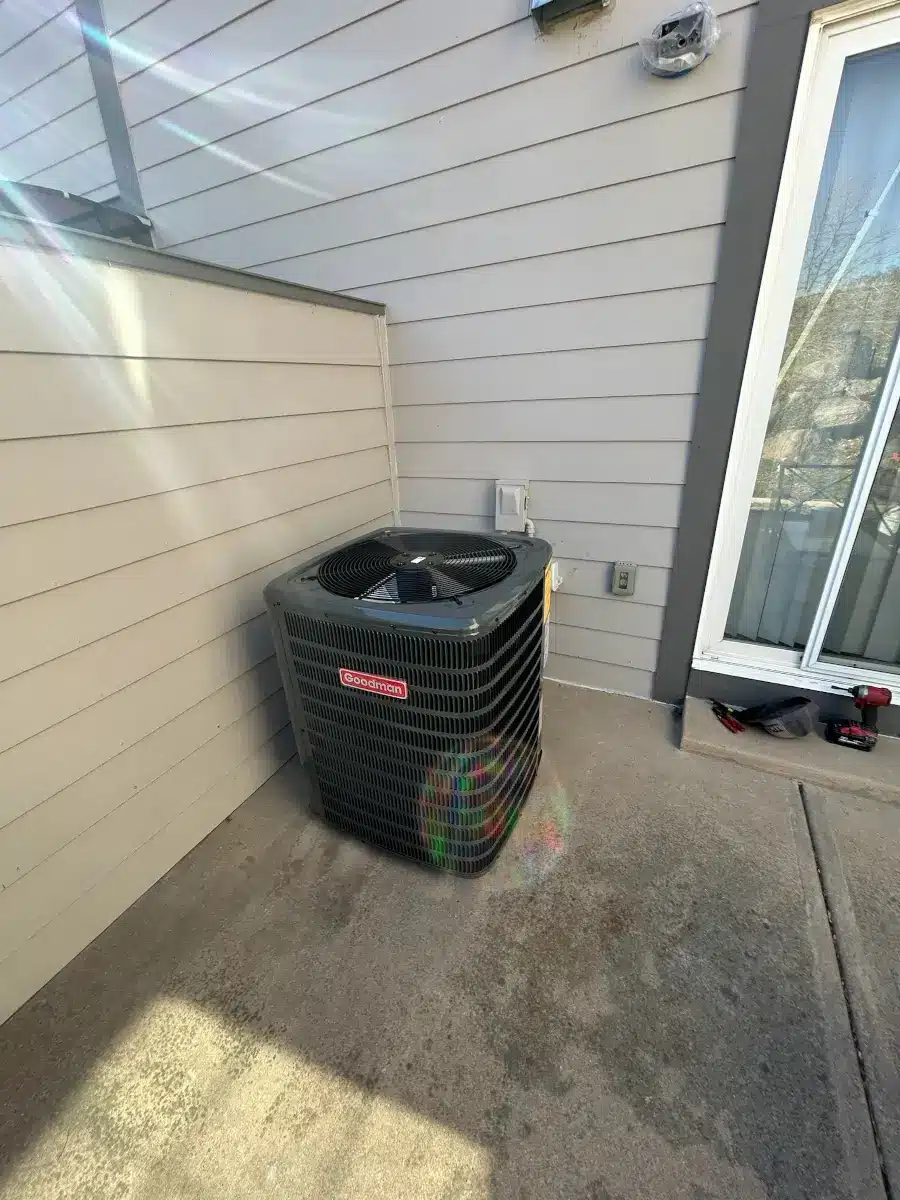
Central air conditioning works on refrigeration instead. It recirculates the air already inside your home, passes it over a cold evaporator coil, dumps the collected heat outside through the condenser, and returns colder, drier air through your ducts. Nothing from outside comes in, and moisture is removed rather than added.
That distinction matters enormously here. A swamp cooler depends entirely on how much moisture the outside air can still absorb, a measurement technicians call wet bulb depression. Dry air has enormous capacity and the cooling is dramatic. Humid air has almost none, and the same unit becomes a very loud fan.
Where a Swamp Cooler Genuinely Wins
Plenty of contractors dismiss these systems outright. That is lazy, and it ignores real advantages that matter in this climate specifically.
Operating cost is the big one. A swamp cooler runs a blower motor and a small water pump, nothing else. Central air runs a compressor, which is the single largest electrical load in most homes during summer. The gap in monthly electric cost is not small, and over a long dry summer it is genuinely significant.
Installed cost is the second advantage. A replacement evaporative cooler is a fraction of what a new condenser, coil, and line set will run you. For a homeowner who needs cooling now and is not positioned to spend several thousand dollars, that math is real and it deserves respect.
There is also a comfort argument that gets overlooked. Our air is punishingly dry most of the year, and a swamp cooler adds humidity that many people genuinely prefer. Skin, sinuses, wood floors, and musical instruments all do better with some moisture in the air.
And in June, when it is 92 degrees with 15 percent humidity, one of these units will drop incoming air temperature dramatically. That is not marketing, it is physics working exactly as designed in the conditions it was built for. The Department of Energy’s Building America Solution Center notes these systems use roughly one quarter the energy of central air conditioning and cost less than half as much to install, which is exactly why they took hold across the dry West.
Where a Swamp Cooler Falls Short in This Climate
The advantages above are real. So are the limits, and homeowners rarely hear about them until they are living with them.
The open window requirement surprises people every time. Because a swamp cooler constantly pushes outside air in, that air has to leave somewhere. That means a cracked window or a dedicated relief vent, which means dust, pollen, noise, and a security consideration on the ground floor.
Filtration is minimal. Air comes in off the pads and into your living space with nothing resembling a modern filter in the path. During a windy spring or a smoky August, that is a meaningful difference from a sealed, filtered, recirculating system.
Cooling is also uneven. A swamp cooler pushes air rather than distributing it precisely, so the room nearest the vent gets cold while the far bedroom stays warm. Central air uses your existing duct system, which was designed to balance the whole house.
Then there is the roof itself. Most swamp cooler installations here sit on the roof, which means a penetration through your roofing, a water supply line running to it, and a unit whose weight and vibration rest on that structure for decades. Every roof penetration is a future leak waiting for its moment, and that risk grows as flashing ages.
Monsoon Season Decides This Argument
Here is the part most comparisons written for a national audience miss entirely, and it is the single most important factor for anyone weighing these systems in this region.
The North American Monsoon pushes moisture up into Colorado roughly from mid July through August. Afternoon humidity climbs, dew points rise, and thunderstorms build over the mountains most afternoons. It is not Houston, but it is dramatically more humid than the air we get in May and June.
Swamp cooler capacity collapses in those conditions. When outside air already carries moisture, the pads cannot evaporate water into it efficiently, and the temperature drop shrinks to almost nothing. The unit still runs, still uses water, still makes noise, and delivers air that feels warm and damp.
Worse, your swamp cooler is adding humidity to a house that is already humid. Homeowners describe it as clammy, sticky, or swampy, which is where the nickname came from in the first place. Nothing is broken. The system is doing exactly what it was built to do, in conditions where that is the wrong thing to do.
So the real question is not which system cools better on average. It is whether you are willing to be uncomfortable during the specific weeks when comfort matters most. That is why most swamp cooler Colorado Springs conversions we perform get scheduled in early August, right when the frustration peaks.
Sweating through August again? Talmich Plumbing & Heating provides free in-home evaluations covering conversion options, sizing, and what your existing ductwork can support. Call 719-822-0448 or schedule online.
Signs Your Swamp Cooler Is Failing
Before the comparison matters, it helps to know whether your current system is actually near the end. These are the symptoms that usually mean a decision is coming whether you wanted one or not.
Weak airflow that does not improve after a pad change usually points to a failing blower motor or a badly scaled squirrel cage. If new pads did not fix it, the pads were not the problem.
Water in places water should not be is the expensive one. Stains on the ceiling below the unit, damp drywall near the vent, or visible pooling on the roof deck mean the pan, the supply line, or the flashing has given up. That is a roof problem now, not just a cooling problem.
A swamp cooler that runs constantly without ever satisfying the house has usually lost most of its capacity to scale, and no amount of running time will get it back. Rust through the pan or cabinet is a similar signal, because once the housing is compromised the water is going somewhere it should not.
Loud grinding, squealing, or heavy vibration means bearings. That is a repair on a young unit and a replacement conversation on an old one. When several of these show up in the same season, most homeowners find that swamp cooler repairs stop making financial sense, and that is the natural moment to price both paths side by side.
What Each System Really Costs to Own
Comparing these two on purchase price alone is how homeowners end up disappointed. The honest comparison includes what you spend every year to keep the thing running.
A swamp cooler is cheap to buy and cheap to run electrically, but it is not free to maintain. Pads need replacing annually. The water line has to be drained and blown out every fall or it freezes and splits. The unit needs covering for winter. Bearings, float valves, and pumps are all consumables.
Central air costs more up front and more per month in electricity, but the annual burden is a filter change and a maintenance visit. There is nothing to winterize and no water line to worry about, which matters in a region where the first hard freeze can arrive in September.
That last row is worth sitting with. Buyers touring homes in this market increasingly expect refrigerated air, and a listing that offers only evaporative cooling narrows your buyer pool. It is not a dealbreaker, but it is a number on a spreadsheet you will eventually care about.
The Hard Water Problem Nobody Mentions
This is the local wrinkle that national buying guides never cover, and it materially changes the ownership math here.
Municipal water in this area runs between 14 and 17 grains per gallon of hardness, which is classified as very hard. Every gallon that evaporates off swamp cooler pads leaves its dissolved calcium and magnesium behind. The water leaves. The minerals do not.
The result is scale, and it builds fast. Pads stiffen and crust over, which chokes airflow and cuts cooling capacity long before they look worn out. The reservoir, float valve, and pump all accumulate the same deposits.
Homeowners who moved here from a soft water market are often blindsided by how much sooner everything needs attention. A swamp cooler here needs pads and descaling on a much shorter cycle than the same unit would elsewhere, and skipping it means paying to run a system that has quietly stopped cooling well.
Central air sidesteps this entirely. Its condensate flows out rather than evaporating in place, so there is no mineral accumulation and no consumable getting destroyed by the water chemistry.
What Converting From a Swamp Cooler to Central Air Involves
Most homeowners assume conversion means tearing the house apart. In the majority of cases here, it does not, and the reason is your furnace.
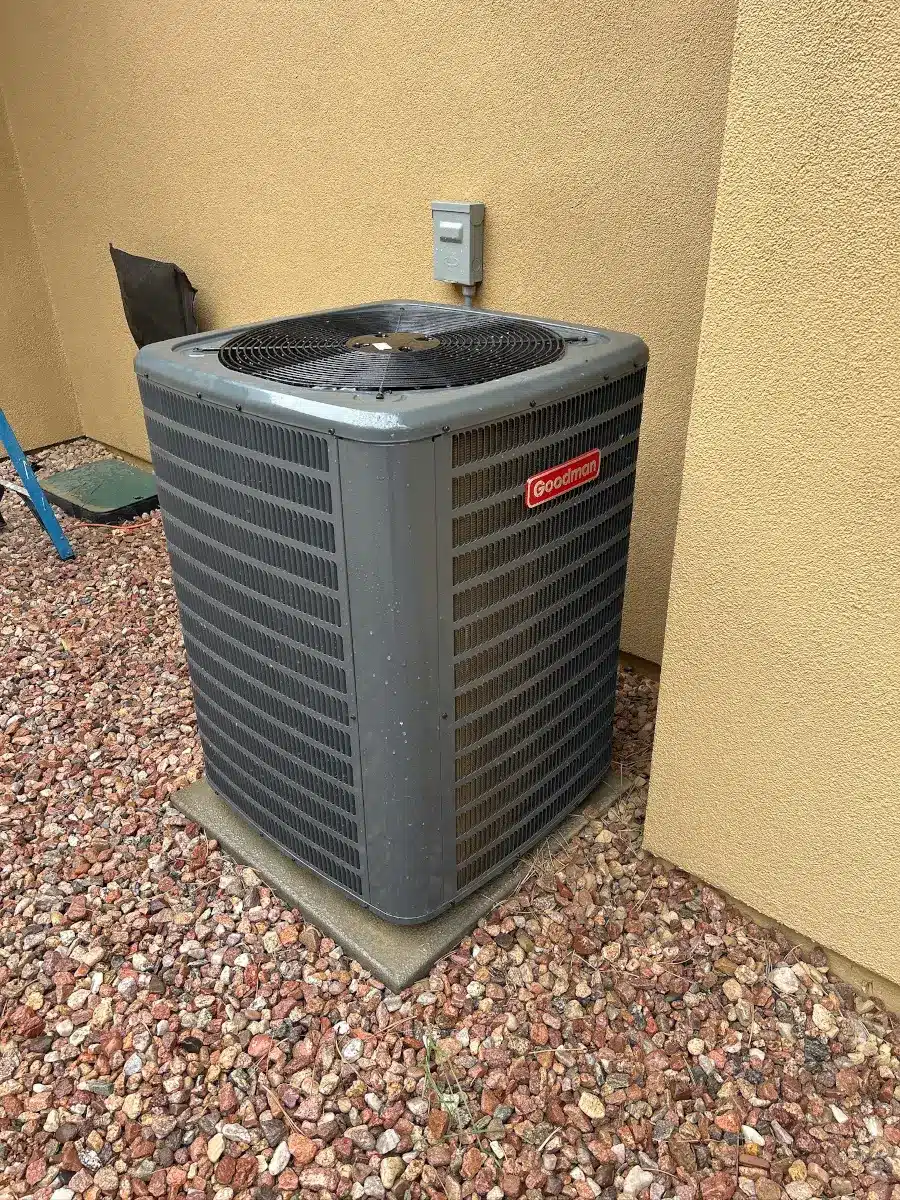
If your home already has a forced air gas furnace and ductwork, you are most of the way there. That duct system was sized to move conditioned air, and central air uses the same blower and the same runs. What gets added is an outdoor condenser on a pad, an evaporator coil in the plenum above the furnace, a refrigerant line set between them, and an electrical circuit for the condenser.
The old swamp cooler comes off the roof, and this is the part people underestimate: the penetration has to be closed and flashed correctly. A conversion that leaves a lazy patch up there trades a comfort problem for a water problem, and water problems are always more expensive.
Sizing is where local expertise earns its keep. At roughly 6,000 feet, thinner air changes how much heat a given system can actually move, and a load calculation run for sea level conditions produces a system that underperforms here. That calculation should be done for your specific home, at this elevation, against local design temperatures.
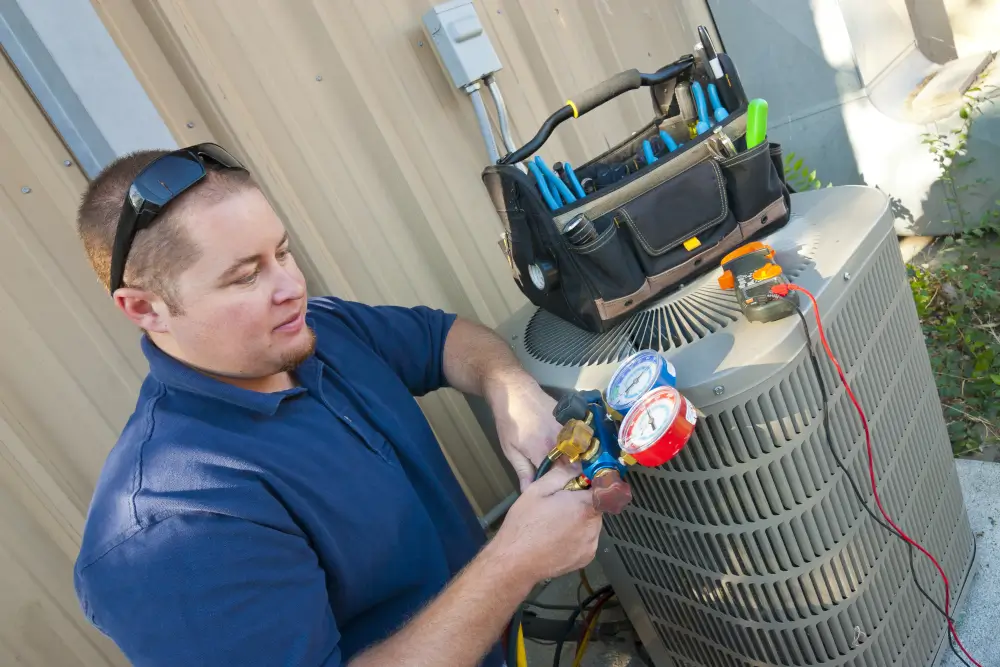
One more thing worth raising while a technician is already there. Since a condenser and coil are being added anyway, a cold climate heat pump does the identical cooling job in summer while also cutting heating costs in winter, and current heat pump rebates can narrow the price gap substantially. For homes with an aging furnace, that conversation is worth having before committing to a plain condenser.
Which One Is Right for Your Home
There is no universal answer, and anyone who gives you one is selling something. The right call depends on your house, your tolerance, and your timeline.
Keep the swamp cooler if:
✓ Yours works and you tolerate the humid weeks
✓ Low operating cost outweighs peak season comfort
✓ You are not planning to sell in the next several years
✓ The added humidity is something you actively like
Convert to central air if:
✓ August makes your home genuinely uncomfortable
✓ Allergies, asthma, or wildfire smoke make filtration matter
✓ You already have a forced air furnace and ductwork
✓ The roof penetration is aging or has leaked before
✓ Resale is anywhere on your horizon
If your existing unit is failing and you were replacing it anyway, that is the natural moment to run the numbers on both paths rather than defaulting to like for like. The incremental cost of converting is smaller at that moment than it will ever be again.
Talmich Plumbing & Heating services swamp cooler Colorado Springs installations and central air systems alike, throughout Monument, Black Forest, Fountain, Security-Widefield, and Cimarron Hills. We will tell you honestly when your existing setup has life left in it, because a customer who trusts our answer calls us again in five years.
Swamp Cooler or Central Air? Let Us Look.
Talmich Plumbing & Heating provides free in-home evaluations across the region. We look at your existing setup, your ductwork, your roof, and your actual comfort complaints, then give you a straight recommendation with no pressure attached.
Serving Colorado Springs, Monument, Black Forest, Fountain, Security-Widefield, Cimarron Hills, and surrounding communities.
Schedule a Free Cooling Evaluation
Or call us directly: 719-822-0448 | Monday through Friday, 8am to 5pm
Frequently Asked Questions
These are the questions homeowners most commonly ask when comparing evaporative cooling to central air. If your situation is not covered below, call Talmich Plumbing & Heating at 719-822-0448 and we will walk you through it.
Do swamp coolers work well in Colorado Springs?
Yes for most of the cooling season, and poorly for about six weeks of it. Our air is dry enough from May through early July that evaporative cooling performs excellently and costs very little to run. When monsoon moisture arrives in mid July and holds through August, cooling capacity drops sharply and the unit begins adding humidity to an already humid house. Whether that tradeoff works depends on how much those specific weeks matter to you.
How much does it cost to convert from a swamp cooler to central air?
Conversion cost depends on whether your home already has a forced air furnace and ductwork, since that determines how much of the system already exists. Homes with existing ducts need a condenser, an evaporator coil, a refrigerant line set, an electrical circuit, and proper closure of the old roof penetration. Homes without ductwork are a substantially larger project. Talmich Plumbing & Heating provides free in-home evaluations with itemized quotes so you know exactly what your home requires.
Can I keep my evaporative unit and add central air too?
Yes, and some homeowners do exactly that. Running the evaporative unit through the dry early season and switching to refrigerated air during the humid weeks captures the low operating cost of one and the reliability of the other. The catch is that you are maintaining two systems, including annual pad replacement and winterizing on one of them, so most people eventually consolidate to a single system.
Why does my swamp cooler make the house feel sticky in August?
Because it is adding moisture to air that already has plenty. Evaporative cooling works by evaporating water into dry air, so when outdoor humidity climbs during monsoon season the unit cannot evaporate efficiently and delivers air that is barely cooled but noticeably damper. The system is not broken. It is operating in conditions it was never designed for.
How long does a swamp cooler last in this area?
Typically shorter than the same unit would last in a soft water market, because local water hardness of 14 to 17 grains per gallon accelerates scale buildup on the pads, the reservoir, and the pump. Consistent annual maintenance including pad replacement, descaling, and proper fall winterization extends life considerably. Units that get skipped for a season or two tend to fail early and cool poorly long before they quit entirely.
0 Comments